
Convection, Conduction, and Hybrid: How Vaporizers Heat – and What That Means for Extraction
The heating principle is the most important but least explained technical feature of a Vaporizer. It determines active ingredient yield, taste, uniformity, and the risk of unwanted combustion. This article explains the physics behind it – understandable, but with the numbers and studies that matter.
Anyone dealing with Vaporizers quickly encounters three terms: Conduction, Convection, and Hybrid. They may sound like marketing terms but actually describe different physical ways heat is transferred from the heating element to the plant material. And this path determines almost everything a user ultimately notices: how much active ingredient is released, how the vapor tastes, how evenly the material is used, and whether it chars instead of vaporizing in the worst case.
The core difference between vaporization and combustion is not gradual but fundamental. Cannabis and other herbs burn at about 600 to 900 °C; the vaporization of the desired ingredients occurs in a narrow window around 160 to 230 °C. More than 400 degrees separate these two worlds – and it is exactly in this range that a Vaporizer operates. How precisely and evenly it does so depends largely on the heating principle.
1 · The physics of heat transfer
Heat can be transferred in three ways, and all three play a role in the Vaporizer. Anyone wanting to understand the heating principles must grasp this thermodynamics foundation.
Conduction is the transfer through direct contact between two bodies of different temperatures. Energy is passed from molecule to molecule without the material moving significantly. The illustrative example is the hot stove plate: what is in contact gets hot, what is not remains cooler. The transfer is stronger the greater the temperature difference and the closer the contact.
Heat flow (convection) transfers energy through a flowing medium – here: air. A heating element heats the air, and this hot air flows through the material, transferring its energy. The image is that of a convection oven: it is not the oven walls that cook the food, but the circulating hot air that surrounds it from all sides.
Thermal radiation finally transfers energy as electromagnetic radiation without a carrier medium. It is relevant in some stationary devices, such as early models with halogen lamps, but usually plays only a minor role in modern herb vaporizers and is often grouped with convection. Therefore, we will focus on the two dominant principles – conduction and convection – and their combination.
2 · Conduction in the Vaporizer
In a conductive vaporizer, the plant material lies directly in a heated chamber – usually made of ceramic, stainless steel, or glass – or on a heated plate. A temperature-controlled heating element, often made of resistance wire, heats the chamber walls, which then transfer the heat through contact to the material.
The big advantage of this design is its simplicity and speed. There is little between the heating element and the material, so the device is ready to use quickly: warm-up times of around 20 to 30 seconds are typical. Conductive devices are also structurally robust, cheaper to manufacture, and easy to operate – the user's inhalation technique hardly affects the result.
The inherent disadvantage lies in the uniformity. Because only the material that actually touches the chamber wall heats up, temperature gradients occur: hot on the outside at the wall, cooler in the middle of the filling. This leads to two well-known effects. First, the material at the contact surface can locally overheat and char (so-called hotspots), while the inside has not yet vaporized. Second, stirring is usually necessary to achieve even use. This is exactly why conduction is considered somewhat more prone to localized burning at high temperatures.
Typical examples of this principle are compact pocket devices like the PAX Mini or the DaVinci IQ, where size, battery life, and simplicity are the main focus.
3 · Convection in the Vaporizer
In a convection vaporizer, the heating element does not touch the material. Instead, air is heated, and this hot air then flows – driven by inhalation or a fan – through the filling chamber. Each particle is surrounded by hot air, and the vaporized active ingredients are carried directly by the airflow.
The decisive advantage is the uniformity of heating. Because the heat reaches all surfaces through the air, there are hardly any hotspots, and the material is used across the entire cross-section. This preserves the delicate aromatic compounds and is considered the reason why convection devices regularly lead in taste tests. A second advantage: as long as no draw is taken, no hot air flows through the material – it only vaporizes during active inhalation, which reduces waste.
The downside is a higher constructional and operational effort. Convection devices tend to take a bit longer to heat up (around 30 to 60 seconds) and are sensitive to draw technique: if drawn too fast, the air cools down and the vapor becomes thin; if drawn too slowly, the material can overheat. They are also more expensive to manufacture. Pure convection is therefore more common in ambitious desktop devices (such as the Volcano Classic) and enthusiast portables (such as Tinymight or Firefly).
4 · The hybrid principle
Hybrid Vaporizers try to combine the strengths of both worlds: they combine a preheated, conduction-heated chamber with an active, convective airflow. The conduction component ensures short heat-up times and dense vapor from the first draw; the convection component ensures even penetration of the material during inhalation.
In practice, hybrid devices have heating times (around 20 to 40 seconds) close to conduction devices and uniformity and yield close to convection devices. They are also less sensitive to draw technique than pure convection devices. The price for this is a more complex design. The best-known representatives include the Mighty/Crafty family and the Arizer Solo. It is no coincidence that this category offers the best compromise between comfort and quality in many current recommendations.
5 · Direct comparison of the three principles
The following table summarizes the characteristic properties. Important: The numbers are typical ranges across many devices, not physical constants – an excellently designed conduction device can easily outperform a mediocre convection device. The principle sets the framework; the implementation decides in each case.
Table 1 · Characteristic properties of heating principles. The qualitative features follow from the physics of heat transfer; the time values are typical experience and manufacturer values, not laboratory measurements.
| Characteristic | Conduction | Convection | Hybrid |
|---|---|---|---|
| Heat transfer | direct contact | hot air flow | both combined |
| Heat-up time | 20–30 s | 30–60 s | 20–40 s |
| Flavor quality | good | excellent | very good |
| Hotspot / scorching risk | higher | low | low |
| Sensitivity to draw technique | low | medium–high | low |
| Design / Price | simple, affordable | complex, more expensive | complex |
| Example devices | PAX Mini, DaVinci IQ | Volcano Classic, Tinymight | Mighty, Crafty, Arizer Solo |
Reliable measurements of the actual active ingredient yield of specific devices can be found in section 8 (Figure 2, after Lanz et al. 2016).
6 · Vaporizing instead of burning: the crucial temperature window
The actual purpose of a vaporizer is to vaporize the desired ingredients without burning the material. Burning plant material produces several thousand compounds, including tar, benzene, naphthalene, formaldehyde, acrolein, and polycyclic aromatic hydrocarbons – all pyrolysis and combustion products that only form in significant amounts at much higher temperatures.[2]
If the temperature stays below this threshold, these substances are largely avoided while the active ingredients already vaporize – this is exactly where the measurable benefit of vaporization lies. In Gieringer’s pilot study, THC release began at around 180 °C and increased up to 200 °C; during this, three measured toxins – benzene (a known carcinogen), toluene, and naphthalene – were completely eliminated, with carbon monoxide and tar additionally reduced.[3] A follow-up analysis published in a scientific journal confirmed that the vaporizer efficiently delivers cannabinoids while effectively suppressing pyrolysis products generated during combustion.[2] Independent analyses of the vapor composition of the Volcano device[4] as well as studies on the cannabinoid content of vaporized samples[6] support this picture; moreover, a clinical study found that carbon monoxide exposure was lower when vaporizing than when smoking.[5]
Figure 1 · The temperature landscape of a vaporizer
Boiling points at normal air pressure – Terpenes according to PubChem datasets[7], Δ⁹-THC according to Turovsky et al. 2025[8]. The usable vaporization window lies below.
This immediately explains why the heating principle is so important. There are only about 70 degrees between the lower end of the usable window and the combustion threshold, and within this range, the composition of the vapor continuously shifts: the volatile terpenes are already driven off at the upper end, while cannabinoid release only reaches its maximum there. A principle that keeps the temperature even and reproducible (convection, hybrid) hits this range more reliably than one where the chamber wall is significantly hotter than the material in the middle (conduction) – there, the edge and core of the material effectively lie in different sections of this scale.
7 · Boiling points of cannabinoids and terpenes in detail
Almost every Vaporizer manual contains a list of boiling points, and almost every one of these lists has the same flaw: it gives a temperature without specifying the pressure at which it was measured. This is not a mere formality. A boiling point is not a fixed property of a substance but always applies only at a specific pressure. The same substance boils at a significantly lower temperature in a vacuum – this is desirable in the lab because heat-sensitive compounds can be distilled without decomposing. In a Vaporizer, however, normal atmospheric pressure prevails, and only values for normal pressure are meaningful here.
The most well-known case is THC itself. The widely cited approximately 157 °C comes from a distillation at 0.05 Torr, which is about one twenty-thousandth of normal atmospheric pressure. A thermoanalytical study determined the boiling point at normal pressure in 2025 to be 245 ± 6 °C, and that of THCV to be 378 ± 4 °C[8] – both are above the temperature at which plant material begins to burn. This does not mean that a Vaporizer releases nothing at 200 °C. It means that the concept of a "boiling point" is simply the wrong model here: cannabinoids gradually transition into the gas phase well below their boiling points, and this is exactly what vaporizing is based on. What actually arrives at which temperature is shown by the measurement series in section 8; the temperature guide in the Vaporizer Knowledge series covers this in detail.
The following table therefore states the pressure at which each value was measured and is limited to compounds for which reliable substance data are available.
Table 2 · Boiling points with the respective pressure. Terpene values according to PubChem datasets and the standard references cited there[7], cannabinoids according to Turovsky et al. 2025[8].
| Compound | Type | Boiling point | Pressure | Aromatic impression |
|---|---|---|---|---|
| α-Pinene | Terpene | 156 °C | Normal pressure | pine-like, resinous |
| β-Myrcene | Terpene | 167 °C | Normal pressure | earthy, spicy |
| Limonene | Terpene | 175–176 °C | Normal pressure | citrus-like |
| Eucalyptol (1,8-Cineole) | Terpene | 176 °C | Normal pressure | cool, menthol-like |
| Terpinolene | Terpene | 187 °C | Normal pressure | floral, fresh |
| Linalool | Terpene | 198 °C | Normal pressure | floral, lavender |
| β-Caryophyllene | Terpene | 256–259 °C or 129–130 °C |
Normal pressure or 14 mmHg |
peppery, woody |
| α-Humulene | Terpene | 99–100 °C | 3 mmHg Normal value not published |
hoppy, herbal |
| Δ⁹-THC | Cannabinoid | 245 ± 6 °C or 157 °C |
Normal pressure or 0.05 Torr |
– |
| THCV | Cannabinoid | 378 ± 4 °C | Normal pressure | – |
Boiling points are also circulated for CBD, CBN, CBG, CBC, and Δ₀-THC, mostly in the range of 160–220 °C. However, no measurement at normal pressure could be found in the primary literature for any of these values; they are passed along between secondary sources without a specified determination method. Therefore, they are deliberately not listed here.
From this, the choice of temperature can be derived based on what is actually proven: The terpenes that carry the flavor mostly boil at normal pressure between about 156 and 198 °C – so they are already active in the lower part of the vaporization window and are the first to be lost at high settings. The cannabinoids, on the other hand, never reach their boiling point in a Vaporizer; their release is a gradual process that increases with temperature and can only be read from measurement series, not boiling points – exactly what the device comparison in the next section provides. Practically, this means: Lower settings (around 160–180 °C) emphasize aroma and produce thinner vapor, higher settings (around 190–220 °C) deliver more active ingredient with a flatter taste. A device with precise, consistent temperature control allows these zones to be targeted deliberately – another reason why the heating principle is more than just a technical footnote.
8 · Extraction efficiency: what the studies actually show
Here it is worth looking at hard data – and dealing with it honestly. The most thorough comparative in-vitro study to date comes from Lanz and colleagues (2016). They tested five commercially available Vaporizers and determined what percentage of the THC or CBD contained in the material actually transferred into the vapor – each at a uniform target temperature of 210 °C for the electrically heated devices.[1]
Figure 2 · Active ingredient yield in vapor by device
Proportion of extracted THC or CBD of the total content, at 210 °C (gas device without temperature control). According to Lanz et al. 2016.[1]
What these figures honestly do not provide is a simple ranking “convection beats conduction.” The convective Volcano landed in the middle field, while the primarily conductive DaVinci device was even slightly above it for CBD. The study was not designed to test heating principles against each other but specific devices. The reliable conclusion is therefore: Temperature-controlled, electrically heated Vaporizers reliably release the active ingredients in high yield, while the gas-powered device without temperature control performed worse and showed combustion.[1] Precise temperature control is thus the truly decisive factor – and it is often easier to achieve constructively with convective and hybrid designs.
9 · Decarboxylation: why temperature means more than just “vaporizing”
One aspect often overlooked in the discussion about heating principles: heat not only vaporizes the active ingredients, it also chemically alters them. In the fresh plant, cannabinoids mostly exist in their acidic form – for example, as THCA instead of THC. Only through heating is a carboxyl group removed (decarboxylation), turning the inactive acid into the active cannabinoid. Without this step, there would be hardly any effect.
Here too, the Lanz study provides reliable figures: The electrically heated, temperature-controlled devices achieved decarboxylation rates of ≥ 97.3% for THC and ≥ 94.6% for CBD. The gas-powered device without temperature control remained below that with ≥ 87.7%.[1] A Vaporizer that maintains the temperature precisely within the target range also completes the decarboxylation – another argument for controlled, even heating.
10 · Which principle for whom?
From physics and data, some practical recommendations can be derived – without any principle being universally “the best.” For beginners looking for a simple, fast, and affordable device with easy operation, conduction is a sensible choice; moderate temperatures and occasional stirring to avoid hotspots are advised. Those who want maximum flavor, even utilization, and fine control over individual temperature zones and are willing to engage with draw technique are best served by pure convection. And those seeking the best compromise of quick readiness, good yield, and easy handling should choose a hybrid device – not coincidentally the category currently dominating most all-round recommendations.
Across all principles, the precision and consistency of temperature control is more important than the principle on the spec sheet. A high-quality conduction device with good control beats a cheap convection device. The heating principle describes the design – the quality of implementation decides the outcome.
Material, grind size, and airflow – the underestimated factors
The heating principle determines how heat reaches the material – but how well it actually works also depends on how the material is prepared and how you draw. These factors affect each principle differently, and ignoring them wastes much of the theoretical advantage.
The grind size is the most important of these factors. Finely ground material offers more surface area for heat to act on – increasing yield for both principles. For convection, a consistent, medium-fine grind is especially important because the hot air must be able to flow through the material: too coarse pieces heat unevenly, while too fine powder compacts and blocks airflow. For conduction, the contact with the chamber wall is crucial, so pressing the material a bit firmer is worthwhile – whereas a conduction device packed too tightly needs the exact opposite.
This is directly related to the packing density. Convection and hybrid devices work best with a loosely to moderately filled chamber, allowing air to circulate freely. Conduction devices, on the other hand, benefit from a fuller and evenly packed chamber so that as much material as possible touches the hot surfaces. A half-filled conduction device tends to overheat the small amount of material in contact while the rest barely vaporizes.
Finally, the inhalation technique: With convection devices, the draw speed directly determines how much heat reaches the material – slow, steady draws produce dense vapor, hasty draws cool the chamber. Conduction devices are more forgiving here because the heat is already stored in the chamber walls and doesn’t have to be transported by the air. Using a convection device like a conduction device (or vice versa) won’t play to their strengths – a often overlooked reason why the same device performs so differently for different users.
11 · Frequently Asked Questions
Is convection always better than conduction?
No. Convection has inherent advantages in evenness and flavor, but measurement data show that a well-designed conduction or hybrid device can be just as good or better. The quality of temperature control is decisive, not the label.
At what temperature should you vaporize?
It depends on the goal. Around 160–180 °C emphasizes aroma and terpenes with mild effects; 190–220 °C delivers more active compounds but less flavor. Above about 230 °C, combustion begins with its unwanted byproducts and should be avoided.
Why is vaporizing gentler than smoking?
Because it stays below the combustion threshold. In controlled analyses, a vaporizer released active compounds already at about 180–200 °C and eliminated measurable toxins like benzene, toluene, and naphthalene, which only form during combustion; carbon monoxide exposure is also lower.[3][5]
What is Decarboxylation – and does the Vaporizer do it automatically?
Decarboxylation is the conversion of inactive acidic cannabinoids (e.g., THCA) into their active form (THC) through heat. Temperature-controlled vaporizers perform this step during vaporization with rates over 94% practically on the side.[1]
Suitable Vaporizers by Heating Principle
The above post is deliberately neutral. If you want to translate what you’ve read into a specific device: these are models from our range, sorted by their dominant heating principle. Current prices and availability are on the respective product page.
Convection
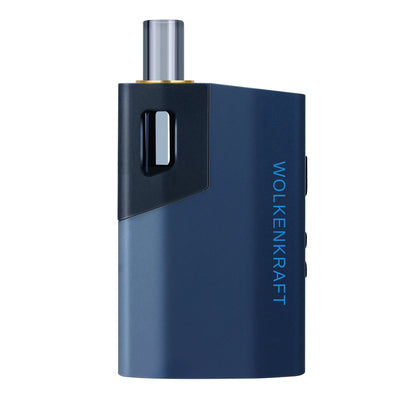
Wolkenkraft Äris Ultra
Pure convection Vaporizer: A hot air stream flows through the material instead of letting it touch a hot surface (see section 3). The result is even heating and full flavor, known for convection – with minimal hotspot risk.
View Äris Ultra →Conduction
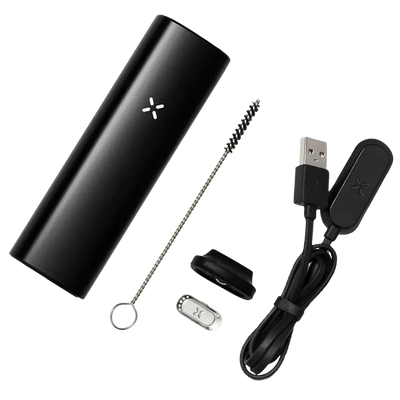
PAX Plus Starter Kit
Predominantly conductive: The material is placed directly in the heated chamber (see section 2). This makes it quick to start, compact, and easy to use – the classic, affordable entry point. Tip from the article: fill rather full and evenly.
View PAX Plus →Hybrid
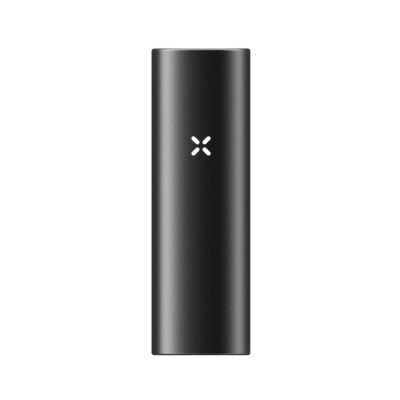
PAX Flow
Hybrid of preheated chamber and active airflow (see section 4): short heat-up time like conduction, even yield like convection – and less sensitive to inhalation technique.
View PAX Flow →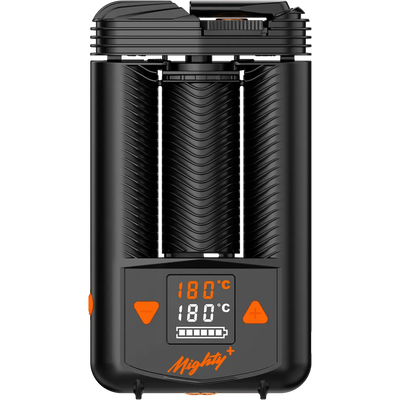
Mighty+ (Storz & Bickel)
The hybrid classic: combines conduction and convection for dense, even vapor. In the comparative study (section 8), this device class represents reliable, high active ingredient yield.
View Mighty+ →Sources
- Lanz C., Mattsson J., Soydaner U., Brenneisen R. (2016): Medicinal Cannabis: In Vitro Validation of Vaporizers for the Smoke-Free Inhalation of Cannabis. PLoS ONE 11(1): e0147286. DOI: 10.1371/journal.pone.0147286
- Gieringer D., St. Laurent J., Goodrich S. (2004): Cannabis Vaporizer Combines Efficient Delivery of THC with Effective Suppression of Pyrolytic Compounds. Journal of Cannabis Therapeutics 4(1): 7–27. DOI: 10.1300/J175v04n01_02
- Gieringer D. (2001): MAPS/NORML Study Shows Vaporizers Reduce Toxins in Marijuana Smoke. Bulletin of the Multidisciplinary Association for Psychedelic Studies (MAPS), Volume 11, No. 1. Classification: Pilot study, published in a professional society newsletter and not peer-reviewed – historically the first study of its kind on cannabis vaporizers and therefore still the starting point of the scientific literature. Its core findings (first significant THC release from about 180 °C, elimination of benzene, toluene, and naphthalene) were confirmed three years later in a peer-reviewed paper by the same author. Full text: MAPS Bulletin 11(1)
- Hazekamp A., Ruhaak R., Zuurman L. et al. (2006): Evaluation of a vaporizing device (Volcano) for the pulmonary administration of tetrahydrocannabinol. Journal of Pharmaceutical Sciences 95(6): 1308–1317. DOI: 10.1002/jps.20574
- Abrams D. I., Vizoso H. P., Shade S. B. et al. (2007): Vaporization as a Smokeless Cannabis Delivery System: A Pilot Study. Clinical Pharmacology & Therapeutics 82(5): 572–578. DOI: 10.1038/sj.clpt.6100200
- Pomahacova B., Van der Kooy F., Verpoorte R. (2009): Cannabis smoke condensate III: the cannabinoid content of vaporised Cannabis sativa. Inhalation Toxicology 21(13): 1108–1112.
- PubChem, National Center for Biotechnology Information (NIH): Substance datasets with the respective associated pressure – α-Pinene (CID 6654), β-Myrcene (CID 31253), Limonene (CID 22311), Eucalyptol (CID 2758), Terpinolene (CID 11463), Linalool (CID 6549), β-Caryophyllene (CID 5281515), α-Humulene (CID 5281520). The boiling points listed there come from the CRC Handbook of Chemistry and Physics, The Merck Index, the Hazardous Substances Data Bank (HSDB), and the Human Metabolome Database (HMDB); for α-Humulene, only a value at 3 mmHg is available there, no normal pressure boiling point.
- Turovsky E. H., Moriarty K., Chavarria N., Parco J. E., Kachadourian R., Brasuel M. G. (2025): Application of thermogravimetric analysis (TGA) and differential scanning calorimetry (DSC) to estimate the normal boiling points of Δ⁹-tetrahydrocannabivarin (THCV) and Δ⁹-tetrahydrocannabinol (THC). Journal of Cannabis Research 8, Article 9. DOI: 10.1186/s42238-025-00373-w – Primary source for the normal pressure boiling point of Δ⁹-THC (245 ± 6 °C) and THCV (378 ± 4 °C) as well as for classifying the 157 °C value as the distillation temperature at 0.05 Torr.
Note: This article serves as technical and scientific information about the functioning of vaporizers and does not make any statement about the consumption of specific substances. The use of vaporizers and handling of the mentioned substances are subject to the applicable legal regulations. The indicated temperature and measurement values are reference values from the cited literature and may vary depending on the device, material, and measurement method.


